



ONTARIO PROVINCIAL PARKS
The Ontario Parks system stretches over 125 years. It began in 1893 with the creation of Algonquin Provincial Park. In 1954 the management and creation of provincial parks came under the Department of Lands and Forests.There are now 330 provincial parks comprising 8% of Ontario's landmass which is an area larger (over 82,000 km2) than the Provinces of Nova Scotia and PEI combined.
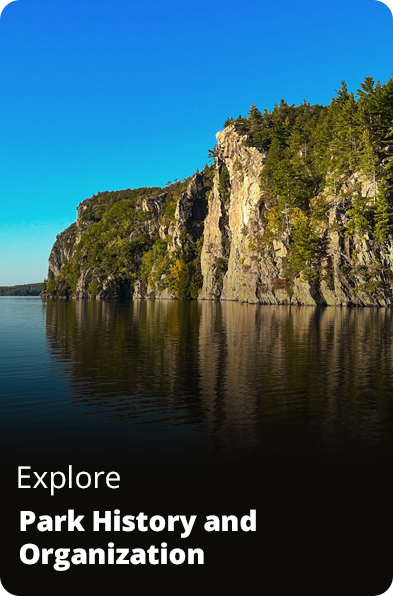
Ontario Provincial
Parks History and Organization
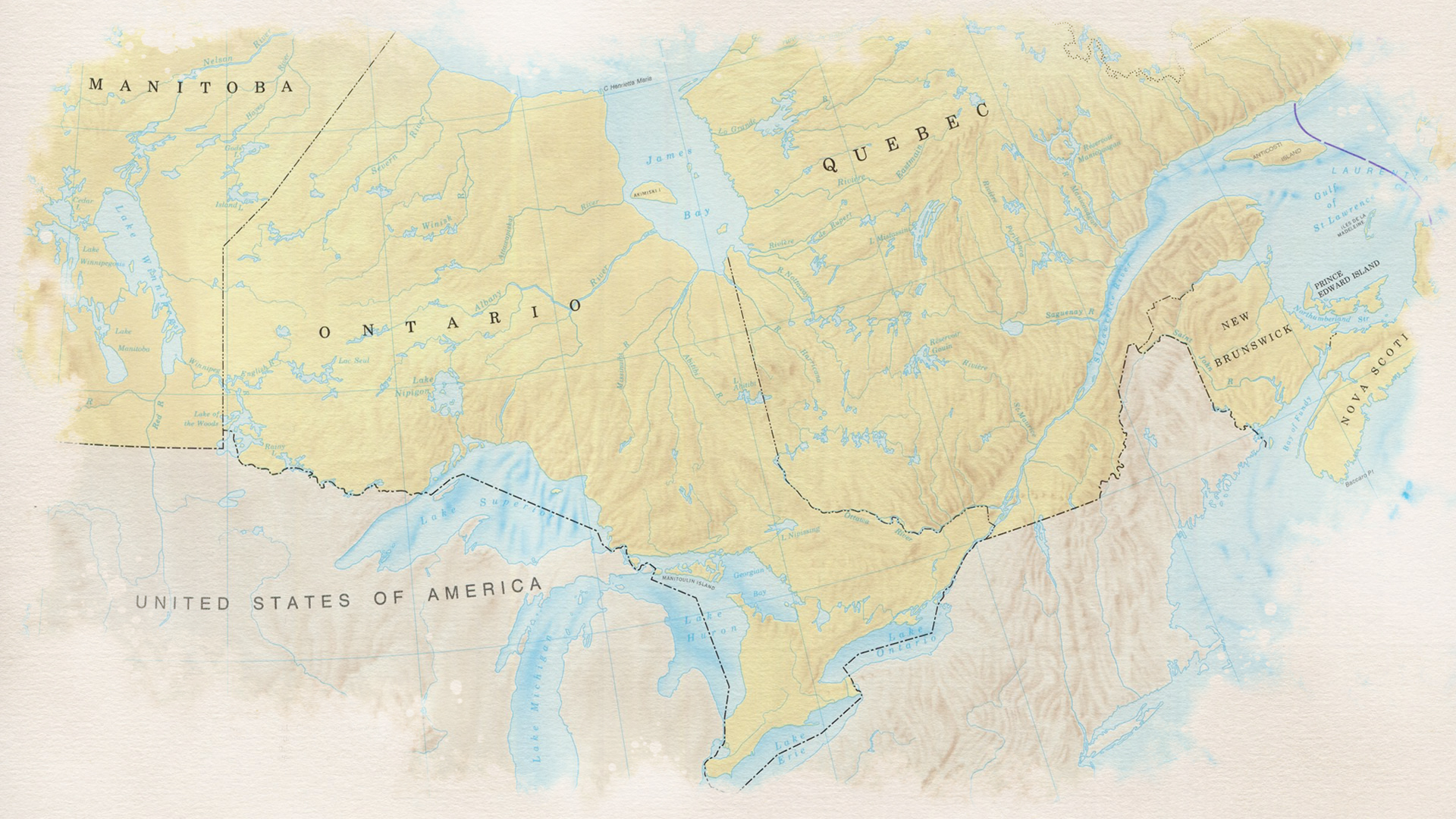
Tap on the Map Pointers to Explore

Algonquin Provincial Park
Established in 1893, it is one of the oldest and largest provincial parks in Canada, covering approximately 7,653 square kilometers (2,955 square miles). The park is situated between the northern boreal forests and the southern deciduous forests, making it a transitional area that supports a wide variety of plant and animal species.



Killarney Provincial Park
Killarney Provincial Park,was opened in 1964 located on the northern shore of Georgian Bay in Ontario, is renowned for its breathtaking landscapes, rugged wilderness, and crystal-clear lakes. Known as one of Ontario’s crown jewels, this park is a paradise for nature lovers.

Missinaibi Provincial Park
Missinaibi Provincial Park, was opened in 1979 and located in Northern Ontario, is a remote and expansive wilderness renowned for its rich history, rugged landscapes, and pristine waterways. Spanning over 500 km along the Missinaibi River, from its headwaters near Lake Superior to the shores of James Bay, the park offers one of the longest free-flowing rivers in North America.

Frontenac Provincial Park
Frontenac Provincial Park, was opened in 1974 located just north of Kingston, Ontario, is a pristine wilderness offering a tranquil retreat for outdoor enthusiasts. Known for its rugged terrain, forested trails, and picturesque lakes, the park spans over 5,300 hectares and is a haven for hiking, canoeing, camping, and wildlife viewing.

Wabakimi Provincial Park
Wabakimi Provincial Park, was opened in 1983 located in Northwestern Ontario, is one of the largest wilderness parks in the province, spanning over 8,920 square kilometers. Known for its remote and untouched landscapes, Wabakimi offers a true wilderness experience for outdoor adventurers.
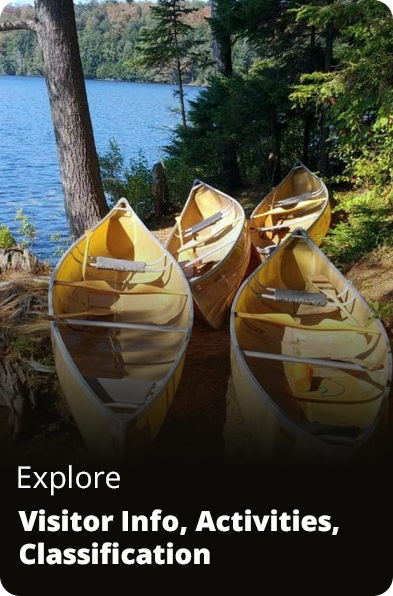
Visitor Information,
Park Activities and Classifications
Tap on the Buttons to Explore
Ontario’s provincial parks offer a wide variety of activities throughout the year, catering to nature lovers, outdoor adventurers, and families. With over 300 parks across the province, each park offers its own unique landscapes, ecosystems, and recreational opportunities.





 Safety and Precautions
- Weather can be unpredictable, Pack for sudden changes in temperature and conditions.
- Bring insect repellent and wear protective clothing.
 Climate and Best Time to Visit
- The boreal forest experiences long, cold winters and short, warm summers.
- Best Time to Visit: Late spring (May-June) to early fall (September).
- National Parks: These parks protect large sections of the boreal forest for conservation and public enjoyment.
- Provincial Parks: These parks focus on conservation, recreation, and sometimes limited resource use.
- Wildlife Sanctuaries: Focused on protecting wildlife and their habitats. Limited public access is allowed, but activities are usually controlled.
- Nature Reserves:Strictly protected for biodiversity conservation, with limited human activities.
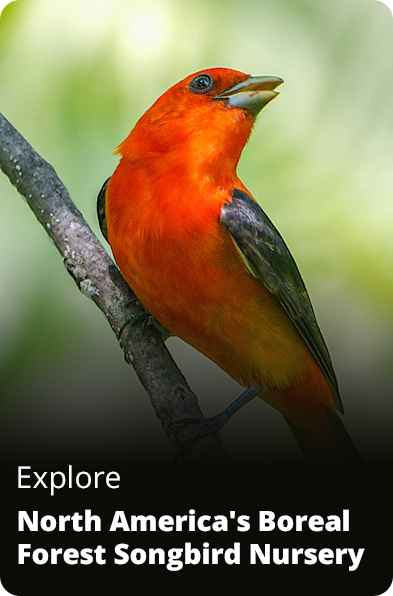
North America's Boreal
Forest Songbird Nursery
Tap on the Birds to Explore
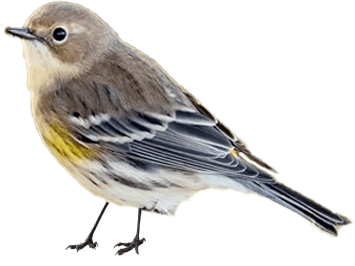
Yellow Rumped Warbler
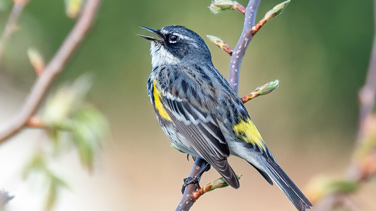
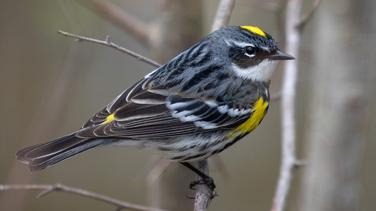
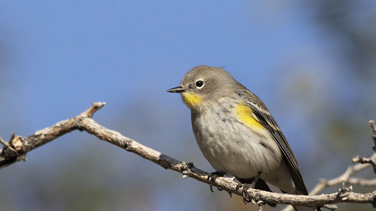
Yellow-rumped Warbler (Setophaga coronata) is a small, lively songbird known for its distinctive bright yellow patches on the rump, sides, and crown. Measuring about 12-15 cm in length, it is one of the most widespread warblers in North America, often found in a variety of habitats from forests to shrublands. During the breeding season, males display striking blue-gray upperparts with black streaks and white underparts, while females and non-breeding males exhibit more muted brownish tones. Despite seasonal changes in plumage, the vibrant yellow rump remains a key identifier year-round. Adaptable and hardy, the Yellow-rumped Warbler migrates across vast distances and can feed on both insects and berries, making it a versatile and resilient species in the avian world.
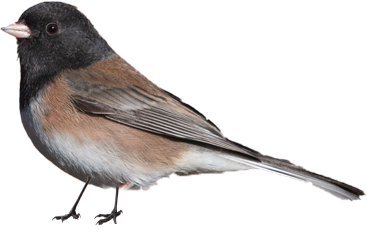
Dark-eyed Junco
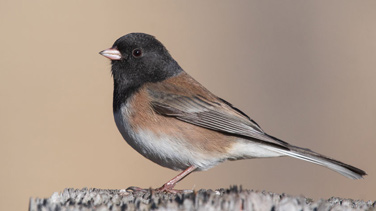
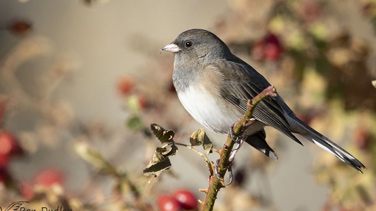
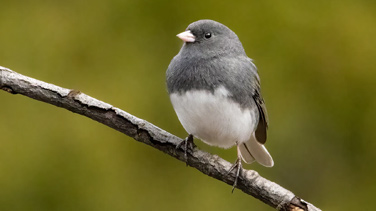
The Dark-eyed Junco (Junco hyemalis) is a small, ground-dwelling songbird commonly found across North America, particularly in forests, woodlands, and open areas. These birds are easily recognized by their distinctive slate-gray or brownish plumage, white belly, and flashing white outer tail feathers, which are especially noticeable during flight. Juncos have dark eyes and a small, pale pink bill. They are highly adaptable, breeding in coniferous and mixed forests, including the boreal forest, and migrating to more temperate regions during the winter.Known for their "snowbird" nickname, Dark-eyed Juncos are a familiar sight at feeders and forest floors, where they forage for seeds and insects.
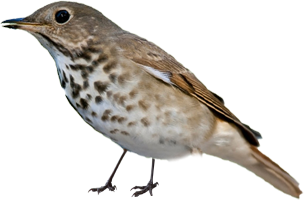
Hermit Thrush
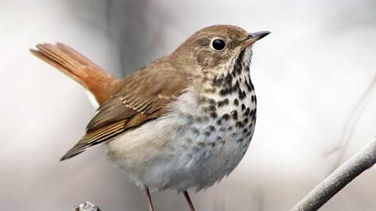
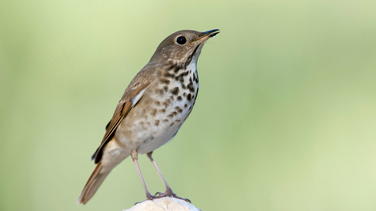
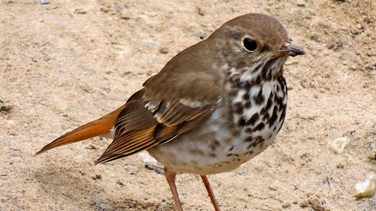
The Hermit Thrush (Catharus guttatus) is a small, woodland songbird known for its hauntingly beautiful, flute-like song. It has a brown back, slightly reddish tail, and pale underparts with distinct dark spots on the chest. Measuring about 15-18 cm (6-7 inches), this thrush is often found in dense forests, particularly coniferous and mixed woodlands, including the boreal forest. Unlike other thrushes, the Hermit Thrush is one of the earliest to return north in the spring and the latest to migrate south in the fall. It is a ground forager, feeding on insects, berries, and small invertebrates, and is easily identified by its gentle, upright posture and soft calls.